

Incline Conveyor
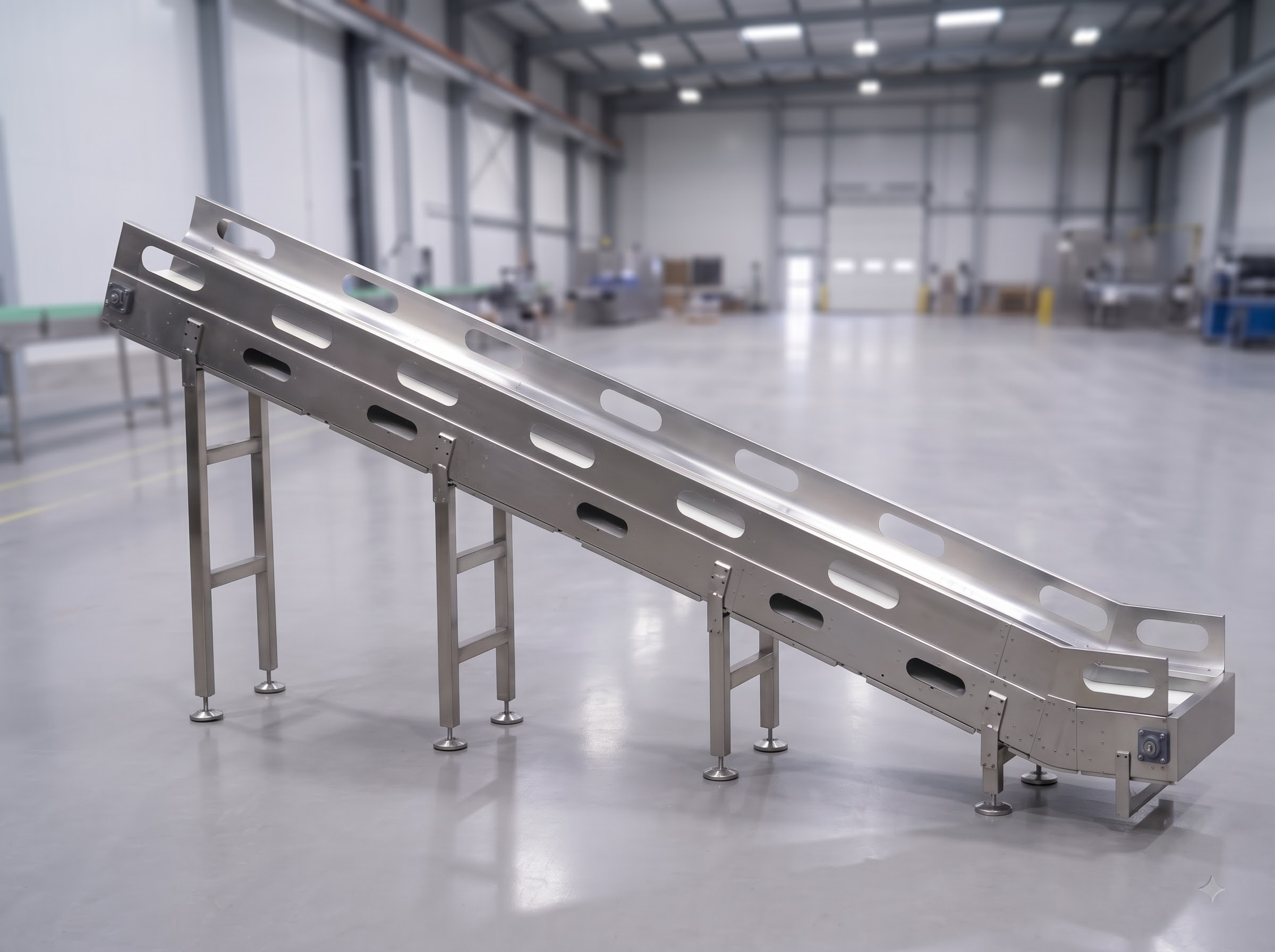
Incline Conveyor Systems for Industrial Material Handling
OSTECH incline conveyor systems are designed to transport products between different elevations in manufacturing, packaging, warehousing, and material handling environments. By moving products along an inclined conveying path, these systems help connect different production stages and make efficient use of available factory space.
An incline conveyor can be configured according to product dimensions, conveying capacity, elevation difference, factory layout, and integration requirements. Depending on the application, the system may incorporate a suitable belt, side guides, cleats, or other product-retention features to support stable transportation along the incline.
At OSTECH, we provide conveyor solutions designed to integrate with compatible production and packaging equipment. Our incline conveyor systems can be planned for applications involving cartons, packages, containers, components, and other suitable products, helping manufacturers establish organized material flow between workstations.
Key Highlights
Efficient transportation between different elevations
Configurable inclined conveying paths
Belt and surface options based on application requirements
Optional cleats and side guides where required
Integration with compatible production and packaging lines
Customizable conveyor dimensions
Drive and speed options based on project requirements
Suitable configurations for industrial material handling
What Is an Incline Conveyor?
An incline conveyor is a material handling system that transports products from a lower level to a higher level, or between different elevations, along an inclined path.
An industrial incline conveyor helps connect equipment and workstations positioned at different heights. It can be used to move products between feeding points, processing equipment, packaging machines, storage areas, and dispatch operations.
Depending on the product and incline angle, the conveyor may use a flat belt, cleated belt, or another suitable conveying surface. Cleats, side guides, and other features can help control product movement when required by the application.
Key Features of Incline Conveyors
Inclined Product Transportation
The conveyor provides a continuous conveying path between different elevations, helping connect production stages without requiring every transfer to take place at the same floor level.
Potential applications include:
Feeding products to elevated equipment
Transferring packages between production stages
Moving products toward packaging or inspection stations
Connecting workstations with different heights
Suitable Belt Configuration
Belt selection depends on the product's weight, dimensions, surface, incline angle, and operating conditions. A suitable belt configuration helps support controlled product movement throughout the conveying path.
Cleats and Side Guides
Where required, cleats and side guides can help retain products and reduce unwanted movement along an inclined surface. Their selection should be based on product geometry, spacing, and the required conveying angle.
Integration with Production Equipment
Incline conveyors can be designed to interface with compatible feeding systems, packaging machines, processing equipment, and downstream conveyors.
Customizable Design
Conveyor length, width, incline, support structure, and drive configuration can be planned according to the available installation space and project requirements.
Benefits of Using an Incline Conveyor
Efficient Use of Factory Space
Inclined transportation can help connect equipment at different heights and reduce the need for separate floor-level transfer arrangements.
Improved Material Flow
An incline conveyor can provide a defined transfer route between production stages, supporting a more organized material handling process.
Reduced Manual Handling
When appropriately integrated into the production line, an incline conveyor can reduce the need for operators to manually move products between different elevations.
Flexible Production-Line Integration
Custom conveyor dimensions and suitable belt configurations allow the system to be planned around existing equipment and material handling requirements.
Application-Specific Product Handling
The appropriate belt surface, cleats, guides, and conveying speed can be selected to suit the product and incline conditions.
Applications Across Industries
Packaging Industry
Incline conveyors can transport suitable cartons, packages, trays, and other products between packaging stations positioned at different elevations.
FMCG Manufacturing
Consumer goods can be transferred between compatible processing, filling, inspection, and packaging equipment using a suitably configured inclined conveying system.
Food Processing
Incline conveyors can be considered for moving suitable food products, containers, or packaged items between processing stages. Belt materials and hygienic design must be selected according to the specific application and cleaning requirements.
Warehousing and Logistics
Inclined conveying systems can help transfer suitable packages and cartons between different handling levels within material handling and distribution operations.
Pharmaceutical Packaging
Appropriately configured conveyors can transport packaged pharmaceutical products, such as cartons and containers, between compatible production and packaging stations.
General Industrial Manufacturing
Incline conveyors can transfer components, finished products, and other suitable materials between assembly, inspection, processing, and packaging workstations.
How an Incline Conveyor Works
Step 1 – Product Loading
Products are placed on the conveyor manually or transferred from upstream equipment at the loading point.
Step 2 – Inclined Transportation
The conveyor drive moves the belt along the inclined path. Belt selection and any cleats or guides are determined by the product and required incline.
Step 3 – Production-Line Transfer
Products are transported toward the next workstation, processing machine, packaging system, or downstream conveyor.
Step 4 – Product Discharge
Products are transferred from the incline conveyor at the discharge point for further processing, packaging, storage, or dispatch.
Incline Conveyor Customization Options
OSTECH incline conveyor configurations can be planned according to application requirements.
Available design considerations may include:
Conveyor length and width
Incline angle and elevation difference
Belt type and surface selection
Cleats and side guides, where required
Conveyor frame material
Drive motor and speed-control options
Loading and discharge arrangements
Integration with existing conveyors
Sensor and automation interfaces
Safety guarding and emergency-stop provisions
Final design selection depends on product characteristics, required throughput, installation conditions, and the overall production-line layout.
Why Choose OSTECH?
OSTECH provides industrial conveyor solutions designed around manufacturing, packaging, and material handling requirements. Each incline conveyor application should be assessed according to the product being transported, the required elevation change, available space, and the equipment at the loading and discharge points.
Our team can discuss:
Application-specific conveyor layouts
Conveyor dimensions and incline requirements
Suitable belt and product-retention features
Drive and control requirements
Integration with existing production equipment
Project-specific engineering and support
Contact OSTECH to discuss your incline conveying requirements and identify a suitable configuration for your facility.
Explore Our Other Conveyor Solutions
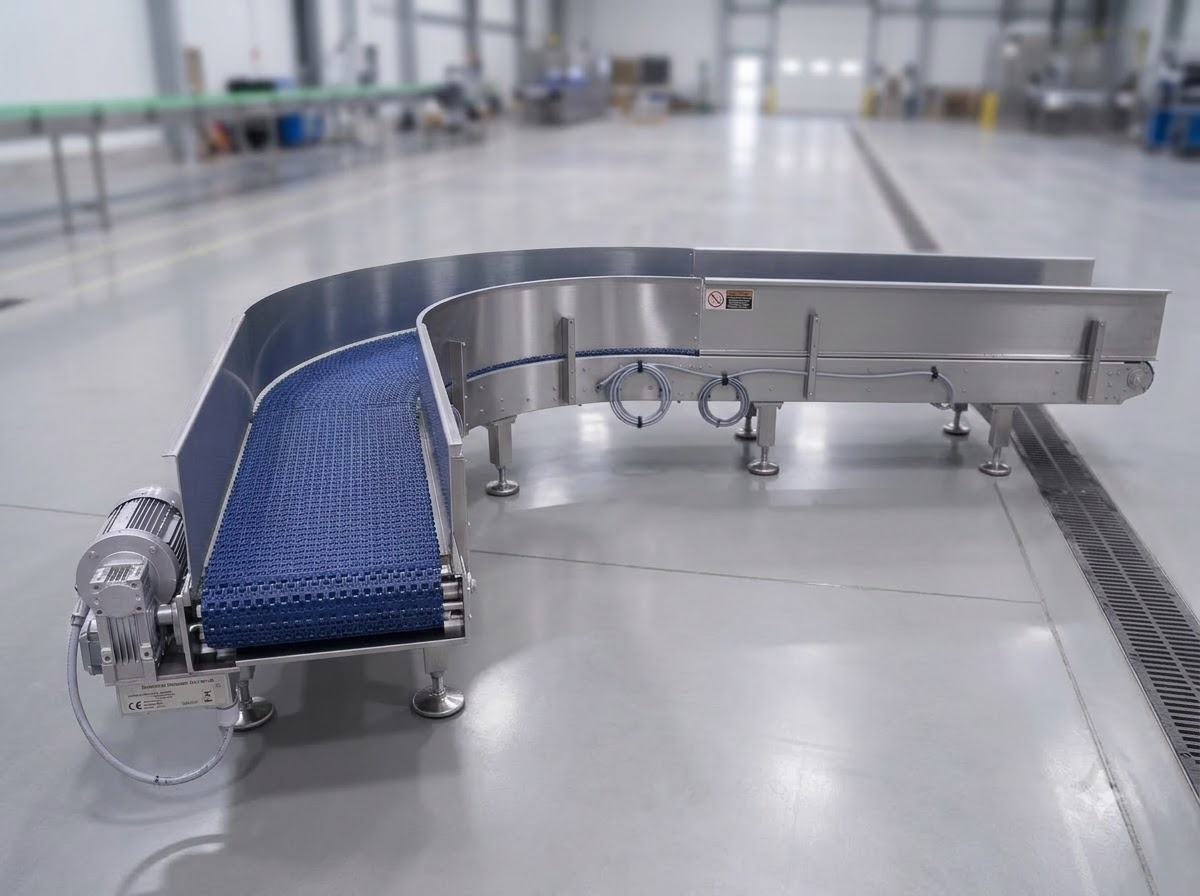
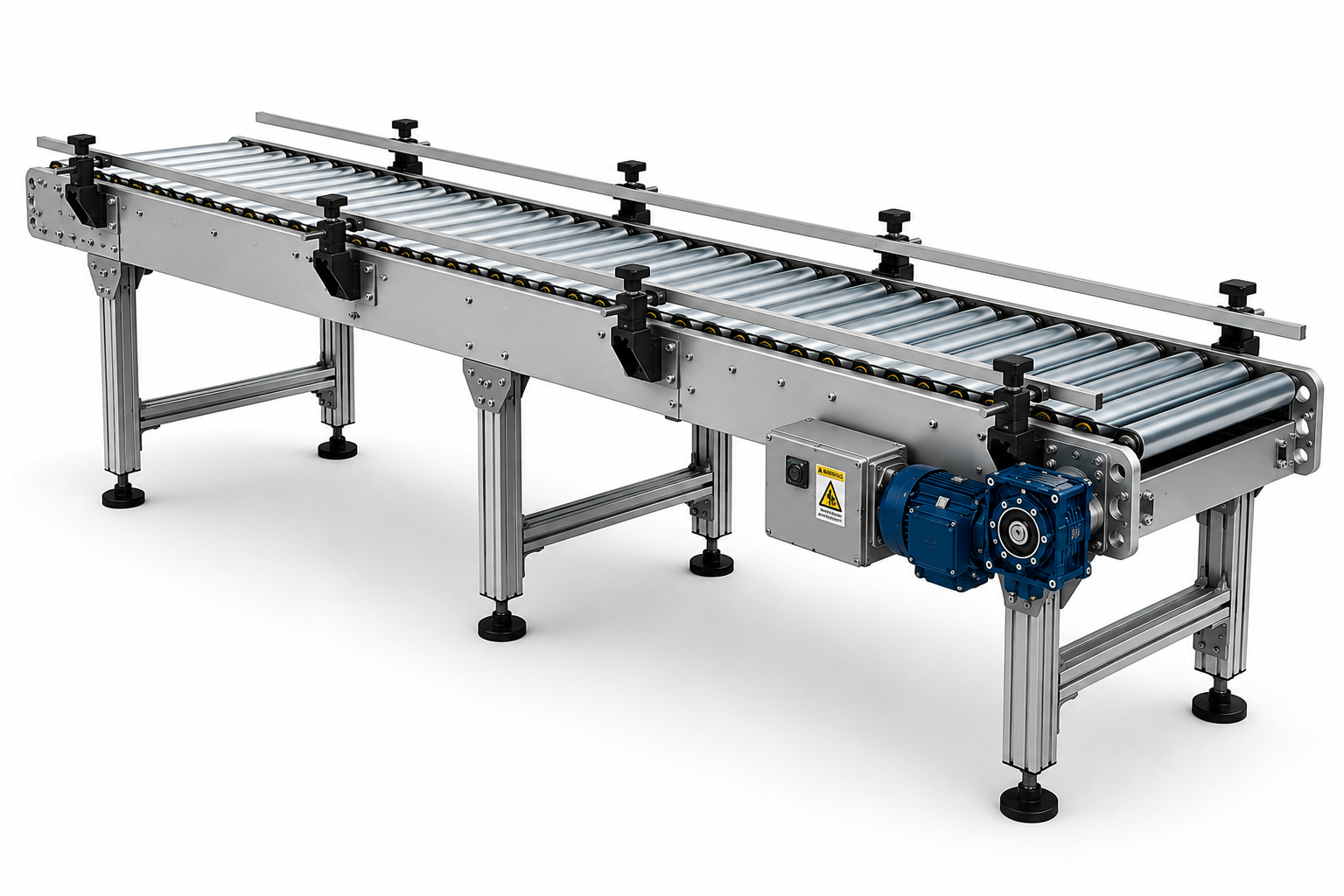
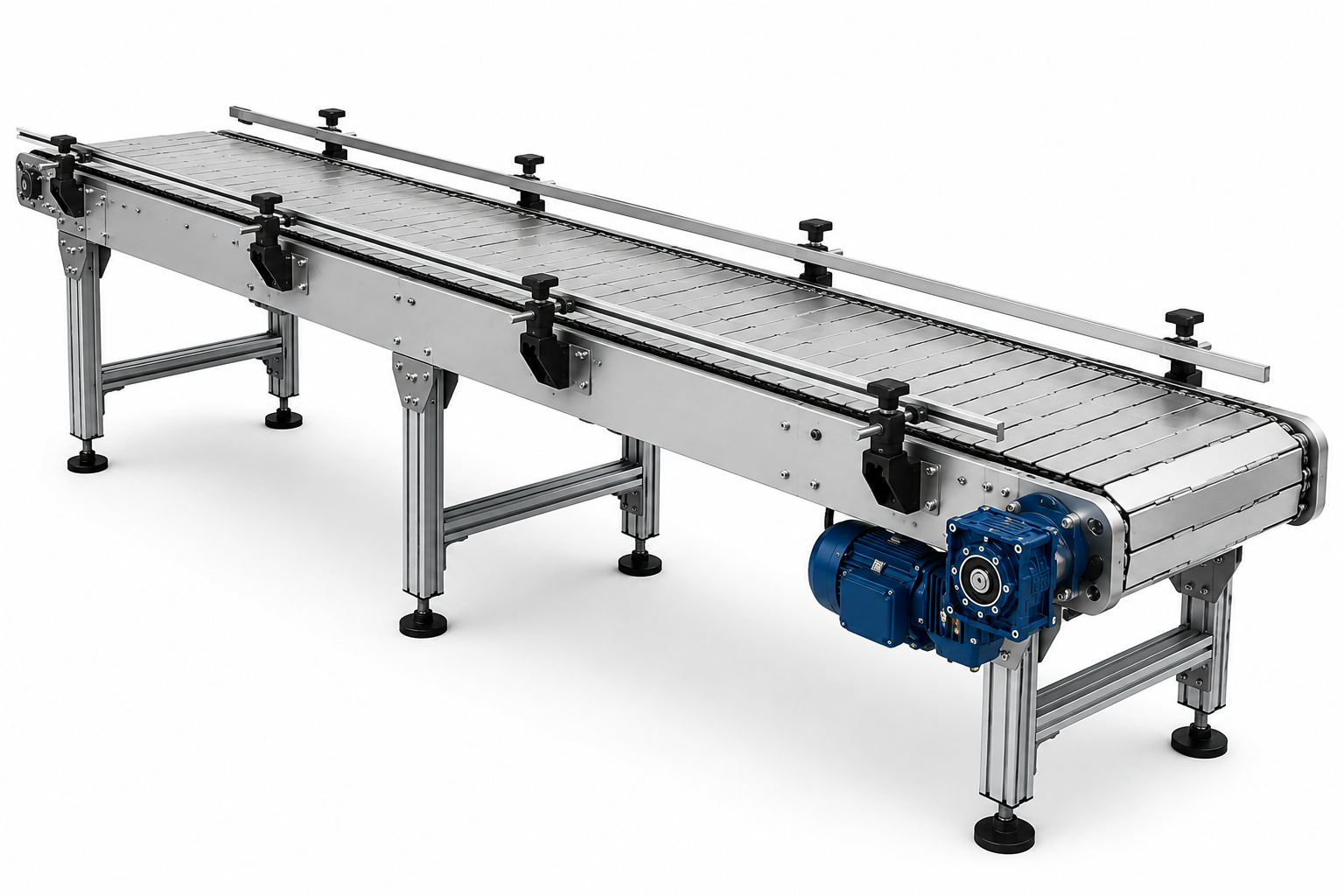
Looking for a conveying system for a different production requirement? Explore OSTECH conveyor solutions, including modular conveyors and slat conveyors, to identify an arrangement suitable for your material handling application.
Related Products
Frequently Asked Questions
We provide conveyor systems, automatic case packers, wrap-around case packers, and custom material handling systems designed to increase production line efficiency.