

Rapid Test Kit Machine
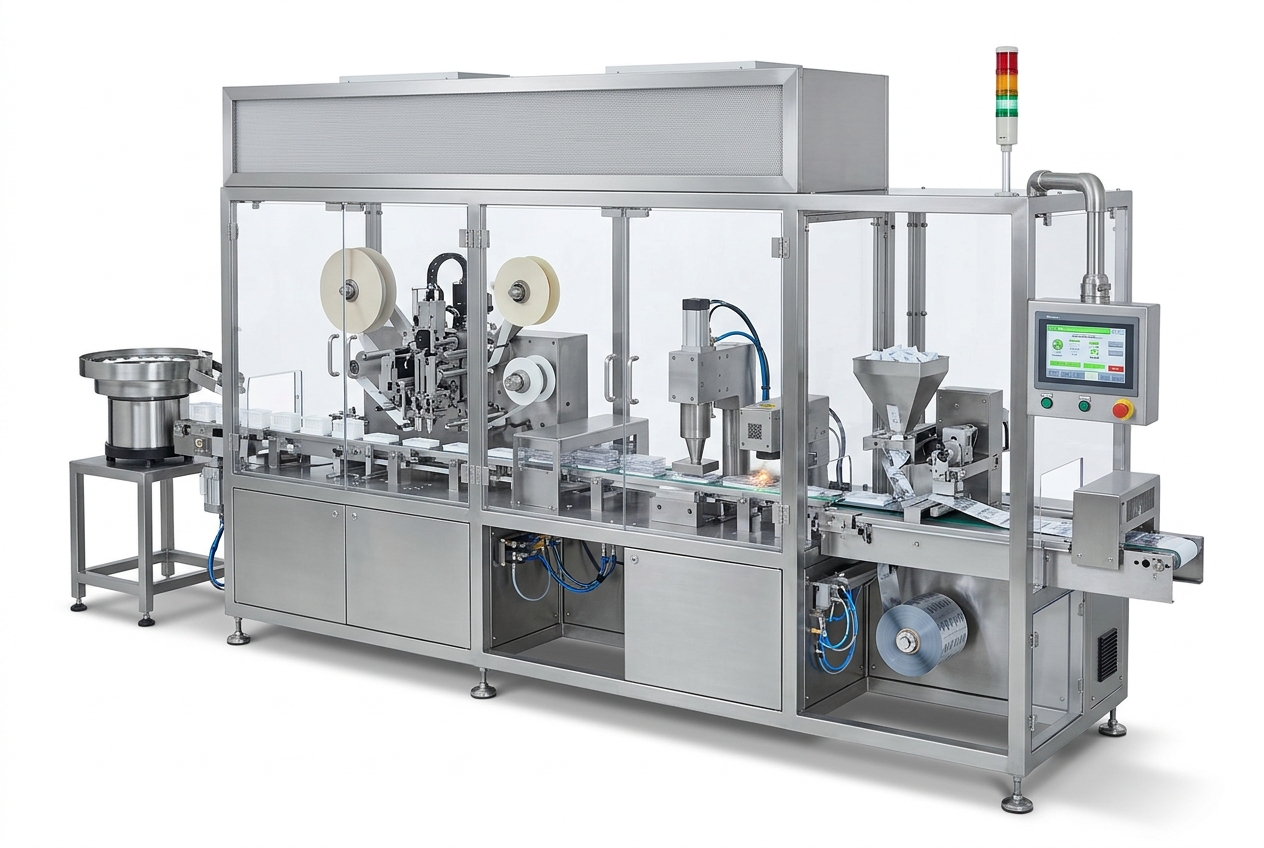
A rapid test kit assembly machine is designed to automate selected assembly operations involved in producing rapid diagnostic test kits. Depending on the product design, the process may include handling test components, assembling cassette housings, positioning internal components, and preparing completed devices for subsequent packaging.
A rapid test kit machine can be configured for specific diagnostic product formats, including lateral flow devices and cassette-based tests. The required equipment depends on component dimensions, assembly sequence, production volume, and the level of automation needed.
An integrated rapid test kit production line may combine assembly, inspection, cutting, and packing operations where required. Selecting suitable equipment helps organize the manufacturing workflow while supporting repeatable component handling and consistent assembly processes.
Key Features of Rapid Test Kit Assembly Machines
Automated Assembly: Supports selected repetitive assembly operations for diagnostic test products.
Cassette Handling: Designed around the dimensions and assembly requirements of compatible test cassette formats.
Production Integration: Assembly equipment can be coordinated with cutting, inspection, and packing processes.
Application-Specific Configuration: Machine selection depends on component design, process sequence, and required output.
What Is a Rapid Test Cassette Assembly Machine?
A rapid test cassette assembly machine automates specific stages of assembling cassette-based diagnostic devices. Depending on the product design, operations may involve positioning components, assembling cassette parts, and transferring completed units for inspection or packing.
A lateral flow assembly machine is used for assembly processes associated with lateral flow diagnostic devices. Its configuration depends on the device structure, required assembly sequence, component handling needs, and production targets.
Applications of Rapid Test Kit Manufacturing Equipment
1. Lateral Flow Device Assembly Machine
A lateral flow device assembly machine supports the assembly of diagnostic devices that use lateral flow technology. Equipment requirements vary according to the test design, internal components, cassette structure, and assembly process.
2. LFA Cassette Assembling Machine
An LFA cassette assembling machine is designed for assembly operations involving lateral flow assay cassette formats. It may support selected component placement and cassette assembly steps based on the device configuration.
3. Test Strip Cutting Machine
A test strip cutting machine is used to cut compatible test strip materials to specified dimensions. Cutting requirements depend on the strip material, required width, process tolerances, and the downstream assembly workflow.
4. Rapid Test Kit Packing Machine
A rapid test kit packing machine supports packaging operations for completed diagnostic kits or their components. Depending on the packaging format, the process may involve product handling, kit arrangement, and preparation for final packaging.
5. Automatic Rapid Test Kit Machine
An automatic rapid test kit machine may integrate selected assembly operations to reduce repetitive manual handling and improve workflow coordination. The actual level of automation depends on the machine configuration and the diagnostic product being manufactured.
Benefits of a Rapid Test Kit Production Line
Improved Assembly Efficiency
Automating repetitive assembly steps can help organize production activities and reduce manual handling between process stages.
Repeatable Component Handling
Suitable equipment can support consistent positioning and handling of compatible diagnostic components when correctly configured and maintained.
Coordinated Production Processes
Integrating assembly with compatible cutting, inspection, and packing equipment can simplify movement between production stages.
Scalable Automation
A rapid test kit production line can be planned around current output requirements and future production needs, subject to equipment capability and process validation.
How to Choose the Right Diagnostic Kit Assembly Machine
Before selecting a diagnostic kit assembly machine, consider these factors:
Product Design: Identify the cassette format, strip dimensions, and components used in the diagnostic device.
Assembly Sequence: Define the operations that need automation, including component placement and cassette assembly.
Cutting Requirements: Determine whether test strip cutting is required and specify the relevant dimensions and tolerances.
Production Capacity: Match equipment capability to the required output.
Automation Level: Assess whether standalone, semi-automatic, or integrated operations suit the process.
Inspection Requirements: Identify the checks needed to confirm correct assembly and product consistency.
Packing Format: Consider how finished kits and their components will be arranged and packaged.
Process Validation: Confirm that equipment performance meets the applicable product quality and manufacturing requirements.
Choosing a Rapid Test Kit Machine Manufacturer in India
When evaluating a rapid test kit machine manufacturer in India, consider the supplier's understanding of diagnostic product design, assembly processes, component handling, and production line integration. Equipment should be selected according to the specific device format and manufacturing requirements.
Businesses searching for a rapid test kit machine supplier, rapid test kit machine distributor, or rapid test kit machine manufacturer should review machine configuration, customization options, installation requirements, maintenance support, and technical assistance.
For integrated production needs, assess whether the proposed assembly machine can work with the required cutting, inspection, and packing equipment. The suitability of the complete setup should be established through technical evaluation and process validation.
Explore More: Customized Equipment Solutions
Different industries require specialized machinery for unique manufacturing and assembly processes. Explore Customized Equipment Solutions to discover equipment designed around specific product requirements, production workflows, and industrial automation needs.
Related Products
Frequently Asked Questions
We provide conveyor systems, automatic case packers, wrap-around case packers, and custom material handling systems designed to increase production line efficiency.