

Articulated
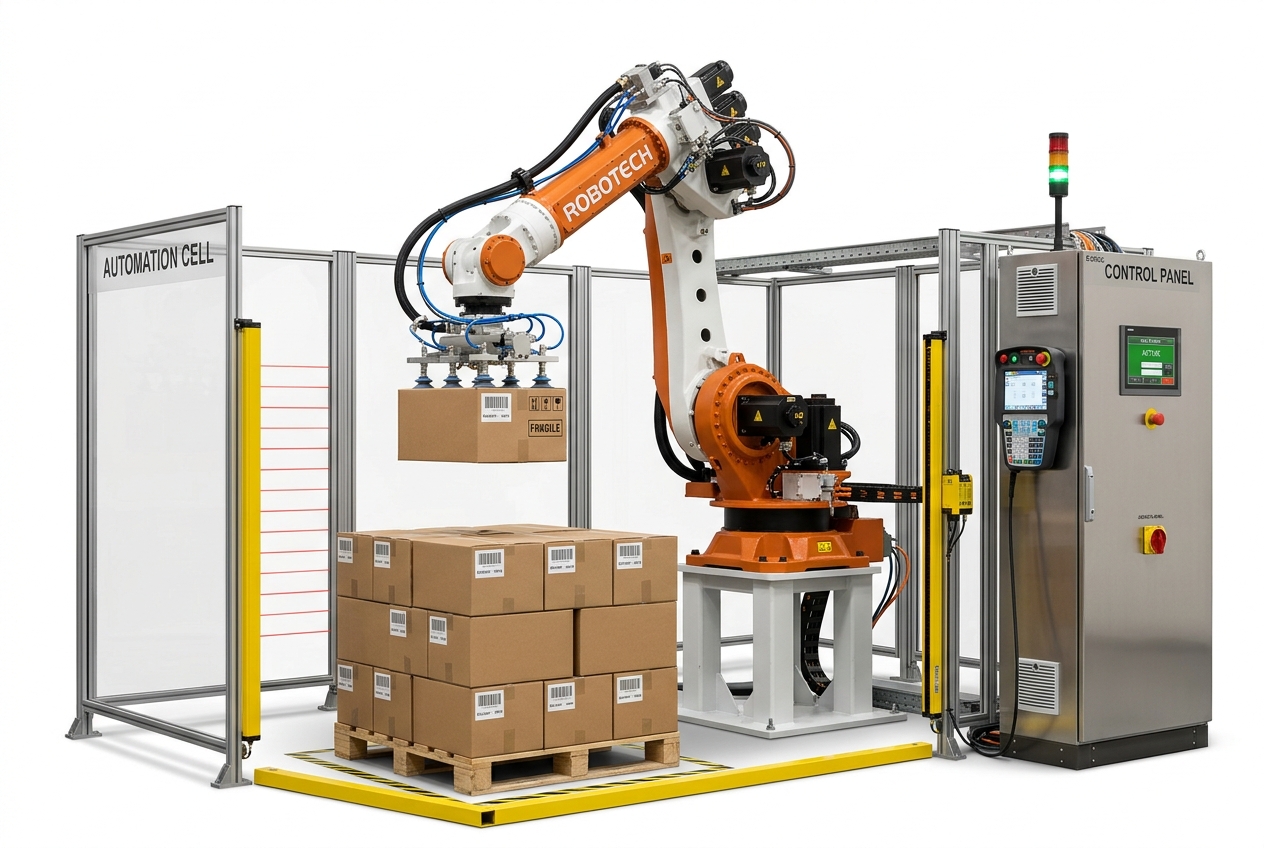
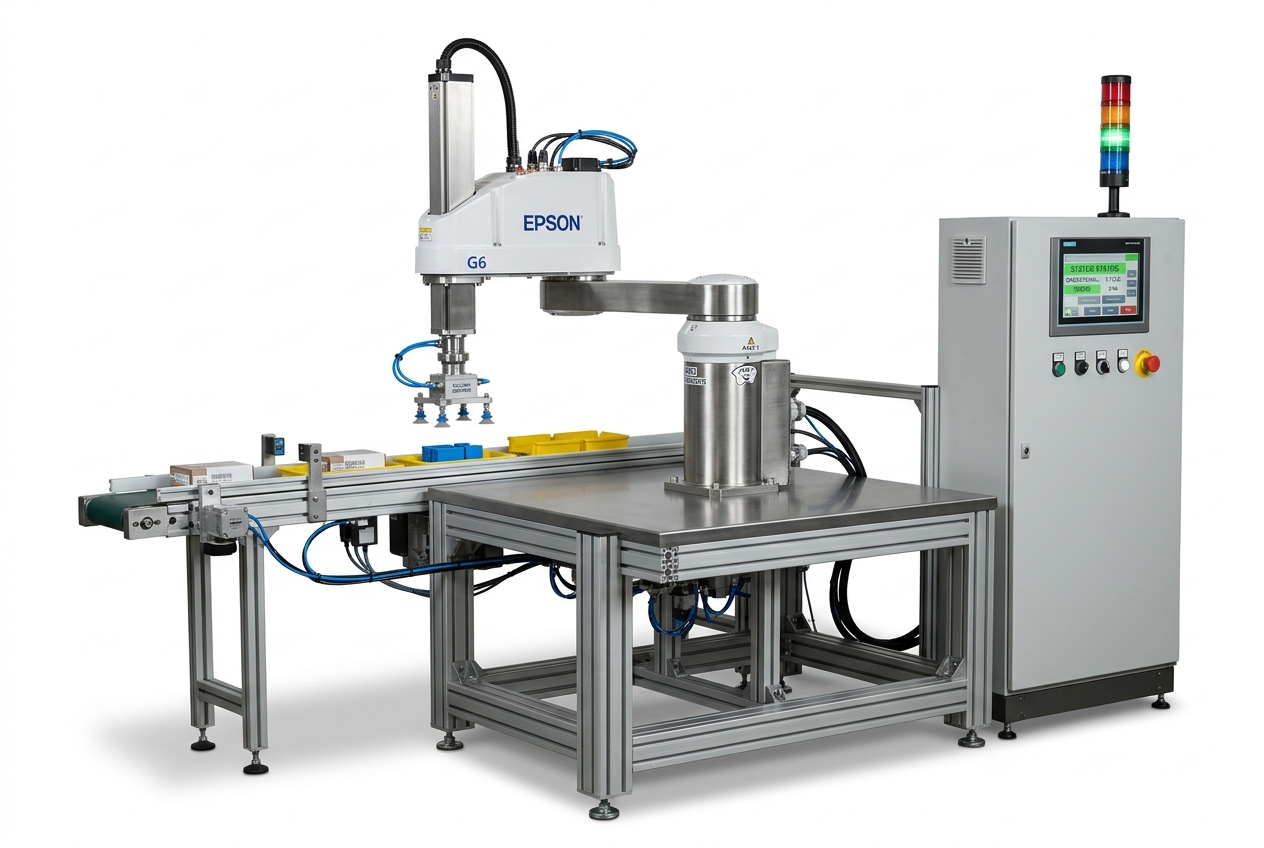
An articulated robot is an industrial robotic system that uses multiple rotary joints to perform complex movements within a defined workspace. Its jointed structure provides flexibility in positioning, orientation, and movement, making it suitable for applications such as material handling, product transfer, packaging, assembly, and palletizing.
An articulated robot arm can perform tasks that require movement across multiple directions, including picking products from one location and placing them at another angle or height. A 6 axis robotic arm offers six degrees of freedom, allowing it to position and orient tools or products across a wide range of movements. This flexibility makes it useful for manufacturing operations that require more complex handling than simple linear or repetitive transfer tasks.
An industrial articulated robot can be configured for different payloads, reach requirements, end-of-arm tooling, and production environments. Applications such as robotic palletizing, case packing, packaging, and pick-and-place require careful consideration of product dimensions, cycle time, working area, and integration with existing machinery. Selecting the appropriate configuration is essential for achieving consistent performance and efficient production workflows.
Key Highlights of Articulated Robot Arms
Supports multi-axis movement for flexible product handling.
Available in configurations suited to different industrial tasks.
Suitable for selected packaging and palletizing applications.
Supports product positioning and orientation across multiple angles.
Can be integrated with compatible conveyors and production equipment.
Can use suitable grippers and end-of-arm tooling for different products.
Supports automated pick-and-place and material-handling operations.
Can be configured according to payload, reach, and cycle-time requirements.
What Is an Articulated Robot?
An articulated robot is a robotic system with connected links and rotary joints that allow movement across multiple axes. Its jointed structure enables it to reach different positions and adjust the orientation of its end effector, making it suitable for a broad range of industrial applications.
A 6 axis articulated robot typically includes six independently controlled axes of movement. This configuration allows the robot to approach products from different directions, rotate tools, and perform tasks that require greater flexibility in positioning. Depending on the model, articulated robots can support applications ranging from lightweight product handling to heavier industrial material movement.
The robot's suitability depends on payload capacity, reach, repeatability, cycle time, mounting arrangement, and the end-of-arm tooling required for the task. Proper integration with the production line is equally important for achieving reliable operation.
Applications of Articulated Robot Arms
Robotic Palletizer System
A robotic palletizer system automates the placement of cartons, cases, bags, or other suitable products onto pallets according to a defined stacking pattern. An articulated robot can move products between an infeed point and a pallet position while adjusting their orientation when required.
A complete palletizing system may include conveyors, grippers, pallet positioning equipment, sensors, and control systems. The configuration depends on product weight, pallet dimensions, stacking height, required throughput, and available floor space.
Articulated Palletizing Robot
An articulated palletizing robot is designed for automated stacking and material handling at the end of a production or packaging line. Its multi-axis movement allows it to access different positions around a pallet and place products according to a programmed arrangement.
When selecting a palletizing robot, manufacturers should consider payload, reach, product dimensions, pallet pattern, and the required number of cycles per hour. Gripper design is also important because cartons, bags, and rigid containers may require different handling methods.
Articulated Robot for Packaging
An articulated robot for packaging can automate product transfer, orientation, grouping, and placement within suitable packaging operations. Depending on the application, it may move products between conveyors, position items for packing, or support secondary packaging processes.
The robot can be integrated with suitable grippers, sensors, and packaging equipment to coordinate product movement. Product characteristics, packaging format, and target production speed should guide the system design.
Articulated Robot for Pick and Place
An articulated robot for pick and place moves products or components between designated positions using a programmed sequence. Its multiple axes allow it to approach items from different angles and place them in locations that may require more complex movement.
Typical applications include:
Transferring components between workstations.
Loading and unloading production equipment.
Placing products onto conveyors or fixtures.
Orienting items before assembly or packaging.
Moving products between different process stages.
The appropriate gripper, reach, and payload must be matched to the products and handling sequence.
Articulated Robot for Case Packing
An articulated robot for case packing can automate the placement of products into cartons or cases. Its multi-axis structure allows it to pick up suitable products, adjust their orientation, and position them according to a defined packing pattern.
The complete application should be evaluated for product weight, carton dimensions, number of items per case, gripping method, and target cycle time. Coordination with carton handling, product feeding, and downstream equipment is important for maintaining a consistent packaging workflow.
Benefits of Using an Articulated Robot Arm
Flexible Multi-Axis Movement
An articulated robot arm can move and orient products across multiple axes. This flexibility makes it suitable for applications involving angled approaches, complex positioning, and movement between different working heights.
Consistent Product Handling
Automating repetitive movements can improve the consistency of product transfer and placement. Actual results depend on the robot's specifications, tooling, calibration, fixtures, and operating conditions.
Reduced Manual Material Handling
Robotic automation can take over selected repetitive lifting, transferring, and positioning tasks. This can reduce manual handling demands and allow employees to focus on process supervision, quality checks, and other operational responsibilities.
Integration with Production Lines
An articulated robot can be integrated with suitable conveyors, palletizing equipment, packaging machines, sensors, and control systems. Proper integration helps coordinate the robotic operation with the overall production workflow.
Industries That Use Articulated Robots
Food and Consumer Goods
Articulated robots can support suitable product handling, packaging, carton movement, and palletizing applications. Food-related installations require appropriate hygiene measures and suitable materials for the intended environment.
Automotive and Engineering
Applications may include component handling, machine tending, assembly support, and transferring parts between production stages. Payload and reach are important selection factors.
Pharmaceutical and Healthcare Products
Suitable articulated robotic systems can handle selected components and packaged products. The application must account for hygiene, product protection, traceability, and relevant quality requirements.
Electronics and Electrical Manufacturing
Articulated robots can transfer components, position products, and support selected assembly or packaging tasks. Tooling should match the dimensions and handling sensitivity of the products.
Plastics and Polymer Manufacturing
Robots can be evaluated for handling moulded components, transferring finished products, and supporting downstream packaging or palletizing operations. Cycle time should align with the connected production equipment.
Warehousing and Logistics
Articulated robots can support carton handling, pallet building, product transfer, and selected material-handling processes. Workspace, pallet configuration, payload, and required throughput should guide the design.
How to Choose the Right Articulated Robot
Selecting an industrial articulated robot requires a clear understanding of the application and production targets. Consider the following factors before choosing a configuration:
Axis configuration: Determine the number of axes required for the movement and orientation of products.
Payload capacity: Include the weight of the product and the complete end-of-arm tooling.
Reach and workspace: Confirm that the robot can access all required pick-up and placement points.
Cycle time: Check whether the complete application can meet the required production rate.
End-of-arm tooling: Select a gripper suited to the product's shape, weight, and surface.
Mounting arrangement: Consider floor, wall, or other supported mounting configurations according to the application.
Integration requirements: Assess compatibility with conveyors, packaging equipment, palletizing systems, and controllers.
Safety and maintenance: Plan safeguarding, operator access, inspection, and maintenance requirements.
These factors help determine whether the proposed robot can meet the application requirements and operate effectively within the production environment.
Articulated Robot Price in India
The articulated robot price in India depends on several factors, including the number of axes, payload capacity, reach, speed, tooling, mounting arrangement, and integration requirements. A standalone robotic arm can have a different cost from a complete robotic palletizer system or automated packaging cell.
The total project cost may also include programming, grippers, conveyors, safety equipment, installation, commissioning, and operator training. Comparing quotations based on the full scope of supply provides a clearer understanding of the investment required.
Before requesting a quotation, define the application, product dimensions and weight, required cycle time, working area, and expected production volume. This information helps establish the technical requirements for the proposed system.
Why Choose an Articulated Robot for Industrial Automation?
An articulated robot is suitable for industrial applications that require flexible movement, product orientation, and automated handling across multiple positions. The right configuration depends on the complexity of the task, payload, working range, production speed, and surrounding equipment.
When evaluating an articulated robot manufacturer in India, an articulated robot supplier, or an articulated robot distributor, review the robot's technical suitability, application experience, integration scope, and after-sales support. The selected system should meet the actual production requirements rather than relying on specifications alone.
Important considerations for a robotic automation project include:
Defining the application and required production output.
Selecting appropriate robot specifications and tooling.
Evaluating payload, reach, and movement requirements.
Planning integration with existing equipment.
Checking product-handling and placement requirements.
Assessing the workspace and required safety measures.
Testing the system with representative products.
Planning maintenance and operator training.
Careful application planning supports reliable integration and helps manufacturers make informed decisions about industrial robotic automation.
Explore More: Cobot Robotic Arm
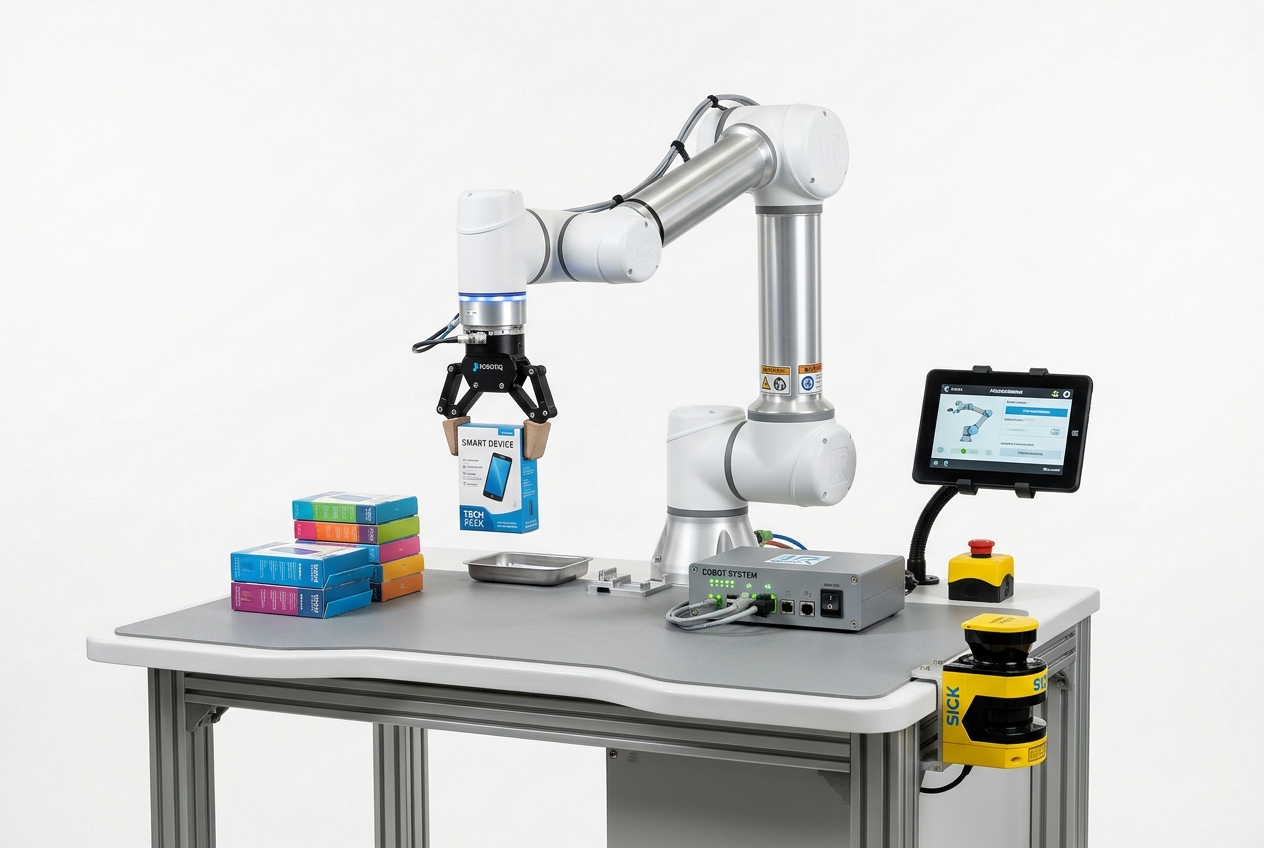
Different robotic applications require different configurations depending on payload, movement, workspace, and production requirements. A cobot robotic arm is another option for selected repetitive handling, packaging, and pick-and-place tasks where collaborative robot capabilities may be appropriate.
Explore the Cobot Robotic Arm to learn more about collaborative robotic automation for suitable industrial and packaging applications.
Related Products
Frequently Asked Questions
We provide conveyor systems, automatic case packers, wrap-around case packers, and custom material handling systems designed to increase production line efficiency.