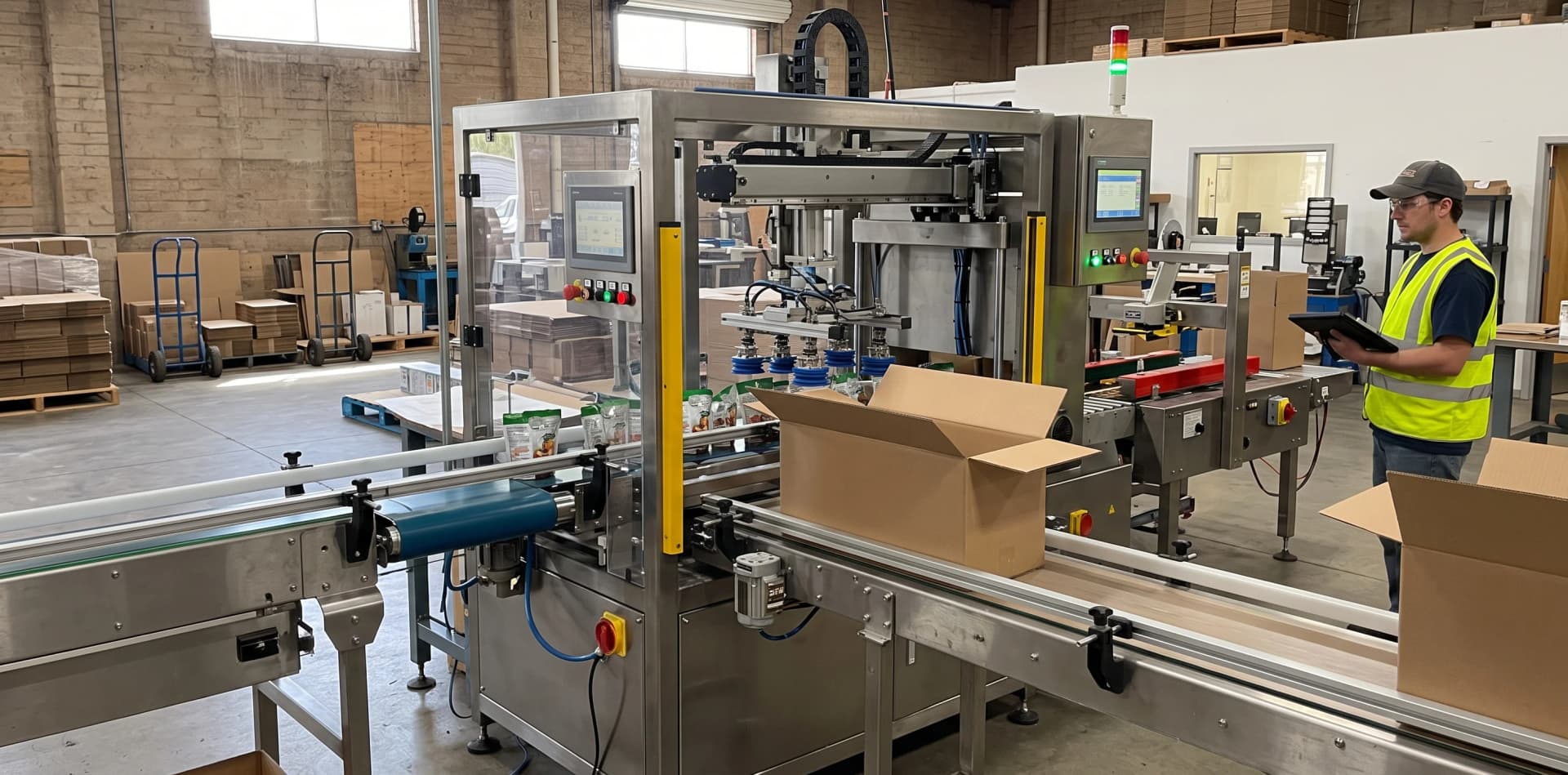
For many small manufacturers, packing is still done by hand. It works when volumes are low, but as orders grow it becomes slow, tiring, and inconsistent. Cartons are packed differently from shift to shift, products get damaged, and more staff are pulled away from production just to keep up with shipping.
Automation can fix this, but small-scale manufacturers often assume it means big machines, big budgets, and big floor space. That is not always true. A single head case packer offers reliable, cost-effective automation designed for moderate volumes. This article explains the key benefits and how to decide whether it is the right fit for your business.
What Is a Single Head Case Packer?
A single head case packer uses one packing head to pick products and place them into cartons in a controlled, repeatable way. It takes over the repetitive lifting, sorting, and placing that operators would otherwise do by hand.
Because it uses one head, the machine is compact and simpler in design than higher-capacity systems. This makes it a practical entry point into automation for small and medium manufacturers who want better packing without a major investment.
Why Manual Packing Holds Small Manufacturers Back
Before looking at the benefits, it helps to understand the problem. Manual packing creates several hidden costs:
Labour tied up in repetitive tasks instead of higher-value work
Inconsistent carton loading and presentation
Higher risk of product damage and packing errors
Operator fatigue, especially in long shifts
Limited ability to scale when orders increase
These issues rarely appear on a single line item, but together they slow growth and raise the real cost of every shipment.
Key Benefits of a Single Head Case Packer
1. Cost-Effective Automation
For small-scale manufacturers, budget matters. A single head case packer generally requires a lower initial investment than higher-capacity systems, so it brings automation within reach without overspending. You pay for the capacity you need and not for speed you will never use.
2. Compact Footprint
Floor space is often limited in smaller plants. A single head case packer is designed to fit into tight layouts, leaving room for other equipment, storage, and safe operator movement. This is a major advantage if your production area is already crowded.
3. Consistent Packing Quality
Machines repeat the same motion with the same accuracy every time. That means uniform carton loading, correct product orientation, and a more professional appearance for every shipment. Consistent packing also strengthens customer confidence and supports your brand reputation.
4. Reduced Labour Dependency
Automating the packing step reduces repetitive manual work. This does not mean replacing people. It means your team can focus on quality control, supervision, and other tasks that add more value. It also reduces your dependence on finding and retaining staff for physically tiring packing roles.
5. Less Product Damage
Controlled, gentle handling lowers the chance of dropped, crushed, or misplaced products. For fragile items such as glass bottles or delicate containers, this can reduce waste and returns noticeably over time.
6. Better Workplace Ergonomics and Safety
Manual packing involves repetitive lifting and bending, which increases operator fatigue and strain. A case packer takes over the most repetitive movements, improving ergonomics and creating a safer, more comfortable working environment.
7. Easier Operation and Maintenance
Because the design is simpler, a single head system is usually easier to learn, operate, and maintain. Operators can be trained quickly, and routine servicing is more straightforward, which keeps downtime low and planning easy.
8. A Foundation for Future Growth
Starting with a single head case packer does not lock you into small volumes forever. As your business grows, you can expand your packing capacity step by step. Ask your supplier about upgrade options early, so the machine you choose today still fits your plans in a few years.
Is a Single Head Case Packer Right for Your Business?
A single head case packer is usually a strong fit if:
Your production volume is moderate and fairly predictable
Floor space is limited
You are automating manual packing for the first time
You want cost-effective automation with a clear return on investment
You pack products such as bottles, pouches, cartons, or containers in consistent formats
It may be less suitable if your volume is very high and continuous. In that case, compare it with a twin head case packer, which uses two heads to deliver higher throughput. If you pack many different products and change formats often, a combi case packer may offer more flexibility.
What to Check Before You Buy
Not every machine suits every plant, so evaluate these points before you decide:
Production speed: confirm the machine can handle your peak output with a margin for growth
Product handling: check that it suits the size, weight, shape, and fragility of your products
Format flexibility: ask how easily it adjusts to different carton sizes
Line integration: make sure it works with your infeed and outfeed conveyor systems, sealing equipment, and inspection units
Support: confirm installation, training, spare parts, and technical assistance
Total cost of ownership: consider energy use, maintenance, and labour savings, not just the purchase price
Asking the supplier to test your actual products on the machine is one of the best ways to confirm real-world performance.
Common Mistakes Small Manufacturers Should Avoid
Choosing the cheapest machine without checking that it meets your speed and quality needs
Ignoring future growth and buying a machine that is outgrown within a year
Overlooking how the machine connects with existing equipment
Skipping product trials before purchase
Forgetting about training, spare parts, and after-sales support
Avoiding these mistakes protects your investment and helps your automation project deliver value from the first day.
Work With an Experienced Automation Partner
Selecting the machine is only part of the project. An experienced manufacturer can review your products and layout, recommend the right configuration, and support installation and commissioning. They can also provide ongoing technical help, which keeps your equipment running reliably and protects your investment as your business grows.
Final Thoughts
A single head case packer gives small-scale manufacturers a practical way to move beyond manual packing. It offers cost-effective automation, a compact footprint, consistent quality, and less manual strain, all without the cost and complexity of larger systems. By understanding your volume, space, products, and growth plans, you can choose a machine that improves efficiency today and supports your business tomorrow.
For a broader view of your options, explore our range of case packing machines.